
This post is very important to all 2024 NECO candidates that are interested in June/July NECO 2024 Animal Husbandry Theory and Objectives Questions and Answers.
NOTE that June/July 2024 NECO Animal Husbandry Theory and Objectives Questions Papers and Answers (100%) Verified Solutions for Friday 19th July are already with us.
NECO 2024 ANIMAL HUSBANDRY ANSWERS
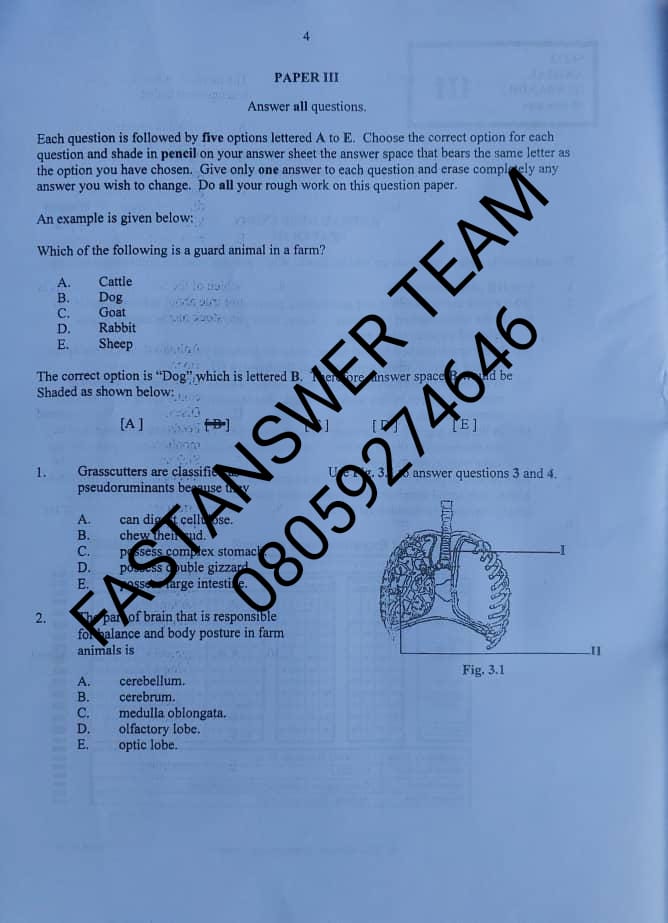
ANIMAL OBJ
01-10: CAEACECAEA
11-20: DCBDADDBDC
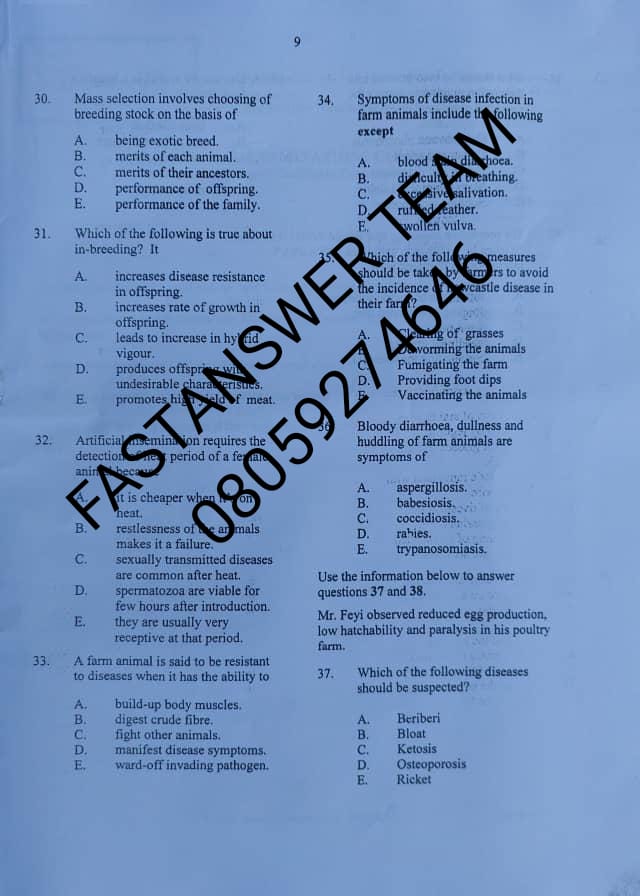
21-30: ADBCEDBACB
31-40: DEEEECAAAA
COMPLETED
ANSWER FOUR(4) QUESTIONS ONLY
(1a)
Fertilization in farm animals refers to the process by which sperm fertilizes an egg, resulting in the conception of a new individual.
(1b)
(i) Prolactin: Stimulates milk production in lactating animals.
(ii) Oxytocin: Stimulates uterine contractions during parturition (birth) and milk letdown during lactation.
(iii) Relaxin: Relaxes the pelvic muscles and widens the pelvis to facilitate parturition.
(iv) Testosterone: Regulates male reproductive traits and secondary sex characteristics.
(1c)
(i) Food source: Snails are a protein-rich food source, consumed in many parts of the world.
(ii) Medicinal value: Snail slime has medicinal properties, used in skincare and wound healing.
(iii) Economic benefits: Snail farming can provide income and employment opportunities.
(iv) Environmental benefits: Snails help control pest populations and maintain ecosystem balance.
===================================
(2ai)
Piglet at birth:
-Colostrum management
-Farrowing management
(2aii)
Kitten after weaning:
-Vaccination and health management
-Nutrition and feeding management
(2b)
(i) Improved nutrition and feeding practices.
(ii) Enhanced cow comfort and welfare.
(iii) Regular health monitoring and disease prevention.
(2c)
(i) Traditional markets: Local markets where hides and skin are sold to traders and artisans.
(ii) Auctions: Organized sales where hides and skin are sold to the highest bidder.
(iii) Direct sales: Farmers selling hides and skin directly to tanneries or export companies.
===================================
(3a)
Diet in animal nutrition refers to the combination of foods and nutrients that an animal consumes to meet its nutritional needs for maintenance, growth, and production.
(3b)
(i) Energy source: Molasses provides a readily available energy source for microorganisms during fermentation, promoting a desirable acidic environment.
(ii) Palatability: Molasses adds sweetness, making the silage more appealing to animals, which can improve feed intake and digestion.
(3c)
(i) High yield: Produces a large quantity of forage to support animal production.
(ii) Nutritional quality: Provides a balanced mix of nutrients, including protein, energy, and minerals.
(iii) Persistence: Remains productive and healthy over time, withstanding grazing and environmental stresses.
(3d)
(i) Rotational grazing: Managing grazing periods and rest periods to prevent overgrazing and allow vegetation recovery.
(ii) Re-seeding and re-vegetation: Introducing new grass species and re-vegetating degraded areas to enhance pasture quality and productivity.
(iii) Brush control: Managing woody plants and brush to reduce competition and promote grass growth.
===================================
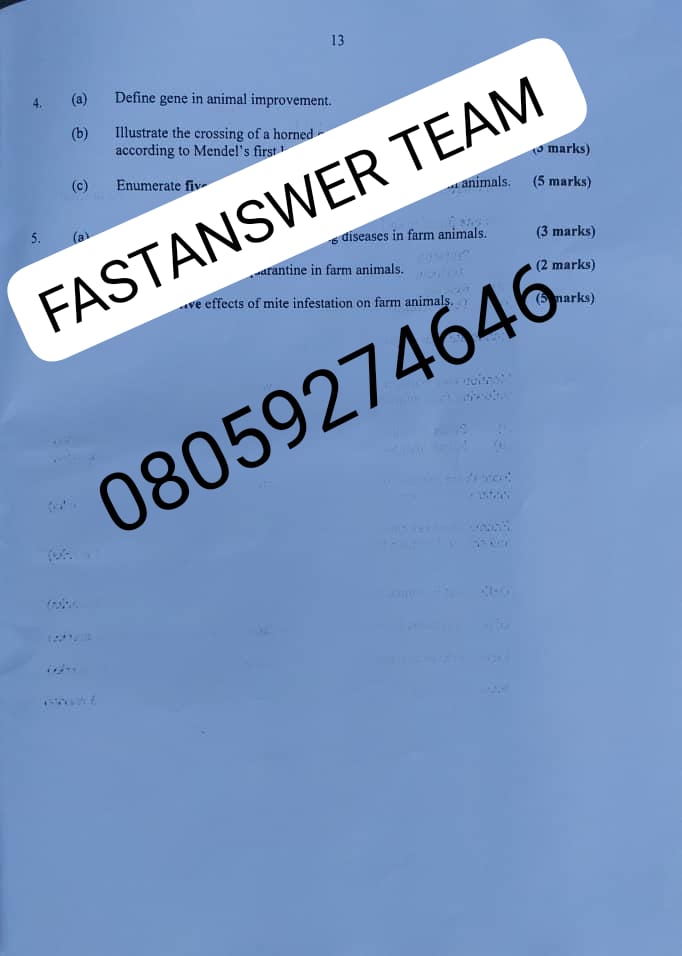
(4a)
In animal improvement, a gene is a fundamental unit of heredity located on chromosomes that contains the DNA sequence which encodes the information necessary for the synthesis of proteins and ultimately determines specific traits in an animal.
(4b)
Diagram
(4c)
(i) Low conception rate: Failure to achieve pregnancy despite successful insemination.
(ii) Semen quality issues: Poor semen quality or quantity can reduce fertility.
(iii) Inaccurate heat detection: Failure to detect the optimal breeding time, reducing conception chances.
(iv) Insemination technique errors: Improper insemination technique can lead to reduced fertility.
(v) Disease transmission: Risk of transmitting diseases or infections through semen or insemination equipment.
===================================
(5a)
(i) Vaccination: Administering vaccines to protect against specific diseases.
(ii) Biosecurity: Implementing measures to prevent disease introduction and spread, such as sanitation, disinfection, and isolation.
(iii) Nutrition and management: Providing a balanced diet, clean water, and proper housing to boost animal immunity and overall health.
(5b)
(i) Disease control: Isolating animals to prevent the spread of diseases to healthy animals.
(ii) Health status determination: Observing animals for signs of disease or infection before introducing them to a new herd or flock.
(5c)
(i) Anemia: Mite feeding can lead to blood loss and anemia.
(ii) Weight loss: Infested animals may lose weight due to discomfort and reduced feed intake.
(iii) Skin irritation: Mite bites can cause skin irritation, inflammation, and lesions.
(iv) Reduced productivity: Infested animals may experience reduced milk production, egg laying, or growth rates.
(v) Stress and discomfort: Mite infestation can cause significant stress and discomfort for the animals.
===================================
COMPLETED
NECO 2024 Animal Husbandry Questions Papers

NECO 2024 Animal Husbandry Answers
How To Get Verified Solutions for June/ July NECO 2024 Animal Husbandry Theory and Objectives Questions Papers?
There are only two ways to get 2024 NECO Animal Husbandry Theory and Objectives Questions Papers and Answers:
1. Share this post to atlest 5 groups on Facebook or 5 telegram groups and send to all your friends and schoolmates. Then come back and scroll down to the comments sections below and comment “Please I need it. Thanks”.
NOTE: We will post both question papers and Answers here immediately we get atlest 150 comments and 500 views on this post. So comment now and share to all your friends to do same.
Please I need it
You’re so cool! I don’t believe I’ve read through a single thing like that before.
So wonderful to discover somebody with original thoughts on this
Subject matter. Really.. thanks for starting this up.This website is one thing
that is required on the web, someone with some originality!